
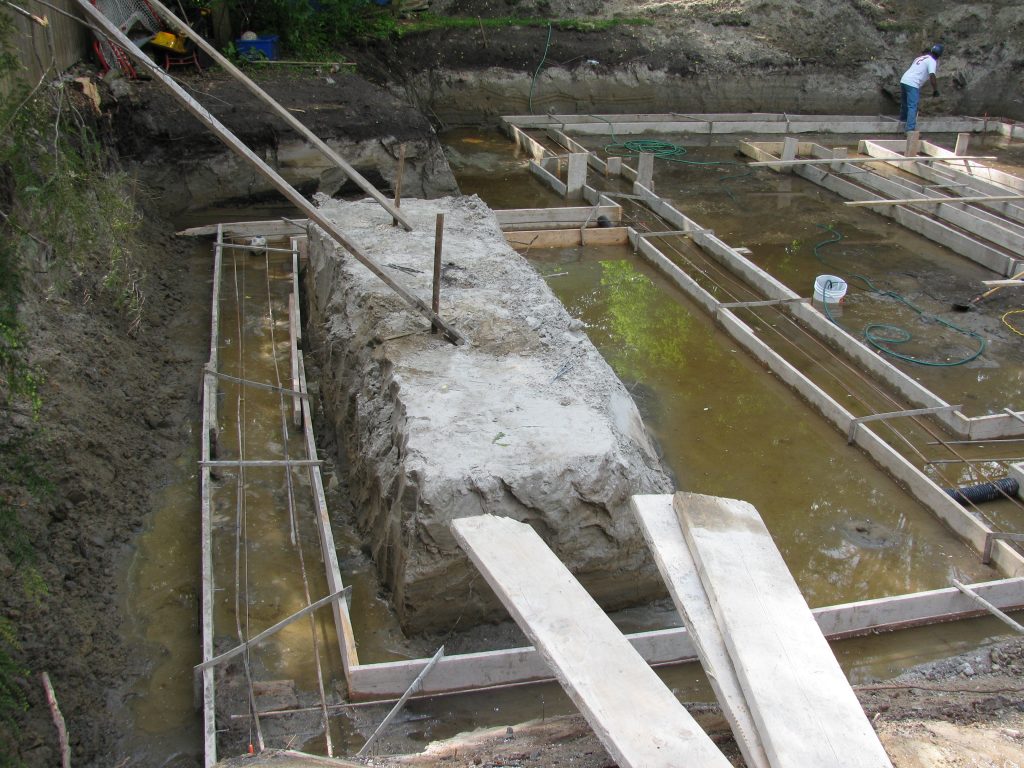
Evidence of water in your excavation
Water Removal and Compaction Techniques for Foundation Excavation
Introduction: The process of excavating a foundation involves several crucial steps, one of which is the removal of water from the excavated hole. Excessive water can compromise the stability and structural integrity of the foundation. Additionally, in cases where officials deem there is too much water, clean compacted crushed stone may need to be added. This essay will discuss the important steps to take and the techniques used to remove water from an excavated hole for a foundation. It will also cover the types of pumps that can be utilized and the necessity of geotechnical analysis to achieve optimal compaction.
Water Removal Techniques:
- Dewatering Methods:
- Wellpoint Systems: These systems utilize a series of closely spaced wells that are connected to a vacuum pump. The vacuum creates a lower water table, allowing water to be pumped out efficiently.
- Deep Well Systems: Suitable for excavations with significant water inflow. Deep wells are drilled into the ground, and submersible pumps are used to extract water from lower depths.
- Sump Pump Systems: These pumps remove water from a sump pit or collection area at the bottom of the excavation.
- Open Pumping: If the water table is relatively low, open pumping with submersible pumps or suction hoses can be employed.
- Temporary Water Control Measures:
- Diversion Channels: Constructing channels to divert water away from the excavation area can reduce water ingress.
- Sheet Piling: Installing interlocking steel or vinyl sheet piles around the excavation perimeter can create a temporary barrier to prevent water seepage.
- Cofferdams: Erecting watertight enclosures within the excavation area helps create a dry working environment.
Clean Compacted Crushed Stone:
- Evaluation by Geotechnical Engineer:
- A geotechnical engineer should assess the soil conditions and determine if clean compacted crushed stone is necessary. If the water table is higher than the bottom of your excavation you will most likely have to add compacted crushed stone to a suitable level.
- The engineer will analyze the soil composition, moisture content, and load-bearing capacity to ascertain the appropriate quantity of crushed stone and compaction requirements.
- Compaction Process:
- Excavate and remove any unsuitable or unstable soil from the foundation area.
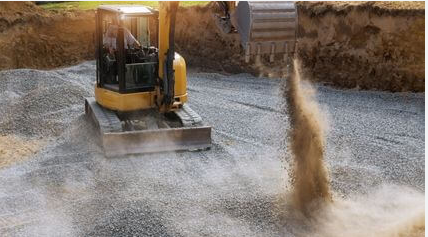
- Add clean crushed stone layer by layer, compacting each layer using suitable compaction equipment (e.g., vibratory rollers).
- The geotechnical engineer will monitor the compaction process, ensuring that the desired compaction range of 75 to 100 Mpa (MegaPascals) is achieved uniformly.
Proper water removal techniques and compaction processes are vital for the success and durability of a foundation. Utilizing dewatering methods such as wellpoint systems, deep well systems, sump pump systems, or open pumping can effectively remove water from the excavation site. If officials determine that excessive water is present, adding clean compacted crushed stone may be necessary. To achieve the required compaction level of 75 to 100 Mpa, the assistance of a geotechnical engineer is indispensable. Their expertise ensures that the foundation is built on stable ground, promoting the longevity and safety of the structure. By employing these techniques and following the recommendations of qualified professionals, one can establish a strong foundation for their construction project.